Help Restore Confidence in Movement and Balance
Dizziness, imbalance, visual-motion sensitivity, and unsteadiness can make everyday activities difficult. For some people, symptoms appear after concussion or another neurological event. Others may experience ongoing balance or vestibular problems that affect walking, driving, exercise, work, or confidence in busy environments. Focus Brain Therapy provides individualized vestibular and balance rehabilitation designed around the patient’s symptoms, functional limitations, and clinical findings.
Understanding Vestibular and Balance Problems
The vestibular system, located in the inner ear, works with your eyes and sensory nerves to help you maintain balance and orientation. When this system is disrupted, it can lead to:
- Dizziness or vertigo
- Imbalance or unsteadiness while walking
- Visual-motion sensitivity (feeling dizzy in busy environments)
- Difficulty focusing or tracking moving objects
- Nausea or lightheadedness
Why Visual Motion Can Trigger Symptoms
Many patients experience increased symptoms in environments with significant visual stimulation. This is often due to 'visual dependency,' where the brain over-relies on visual input because vestibular signals are unreliable. Triggers include:
- Grocery stores or shopping malls
- Scrolling on a phone or computer
- Driving in traffic or through tunnels
- Watching movies with fast movement
Beginning With an Evaluation
Our clinical team performs a comprehensive assessment to understand the root cause of your symptoms. This includes evaluating:
Balance & Stability
Static and dynamic balance testing.
Visual Processing
Eye-tracking and gaze stability.
Coordination & Gait
Walking patterns and motor control.
Dual-Task Performance
Balancing while performing cognitive tasks.
Sensory Load
Tolerance for complex environments.
Cognitive Integration
How the brain processes spatial data.
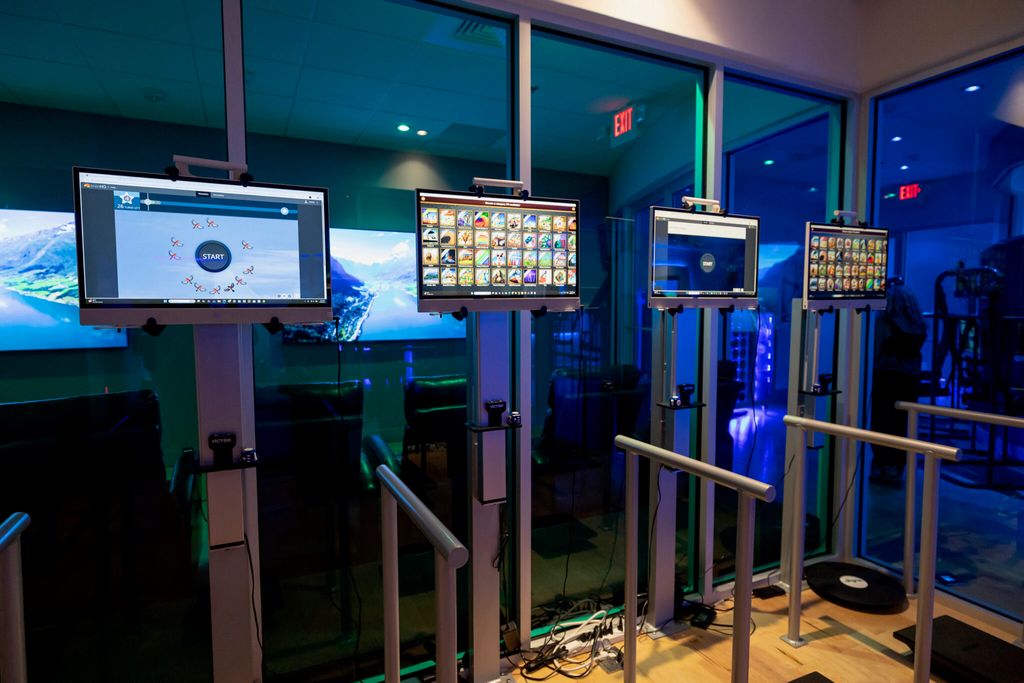
Individualized Vestibular Rehabilitation
Rehabilitation is not one-size-fits-all. We utilize neuroplasticity-based exercises to retrain the brain to process sensory information correctly. This may include gaze stabilization, habituation exercises, and balance retraining.
Vestibular Rehabilitation After Concussion
Dizziness is one of the most common symptoms following a concussion. We address the specific visual and vestibular deficits that often persist after head injuries.
Balance, Cognition, and Movement
We integrate cognitive tasks with physical movement to ensure your brain can handle the demands of real-world environments.
Cognitive Circuit Training®
Our proprietary approach combines physical rehabilitation with targeted cognitive exercises to improve the efficiency of neural pathways involved in balance and spatial awareness.
Balance, Fall Risk, and Older Adults
For older adults, vestibular issues significantly increase the risk of falls. Our program focuses on improving stability and confidence to maintain independence and safety.
Working With Physicians
We collaborate closely with primary care physicians, neurologists, and ENTs to ensure a coordinated approach to your care and recovery.
Frequently Asked Questions
What is vestibular rehabilitation?expand_more
It is a specialized form of therapy intended to alleviate problems caused by vestibular disorders, primarily dizziness and imbalance.
What symptoms may indicate a vestibular problem?expand_more
Common symptoms include vertigo, dizziness, unsteadiness, blurred vision when moving the head, and frequent falls.
Why do grocery stores make me dizzy?expand_more
This is often due to visual-motion sensitivity, where the brain is overwhelmed by the complex visual environment of aisles and moving people.
Can concussion cause dizziness?expand_more
Yes, concussion frequently affects the vestibular and visual systems, leading to persistent dizziness and balance issues.
Start With an Evaluation
Take the first step toward regaining your balance and confidence. Our clinical team is ready to help you understand your symptoms and develop a path forward.
Important Clinical Information
Focus Brain Therapy provides specialized neuroplasticity-based rehabilitation. Results vary by individual. This information is for educational purposes and does not replace professional medical advice. Always consult with your physician regarding medical conditions.